


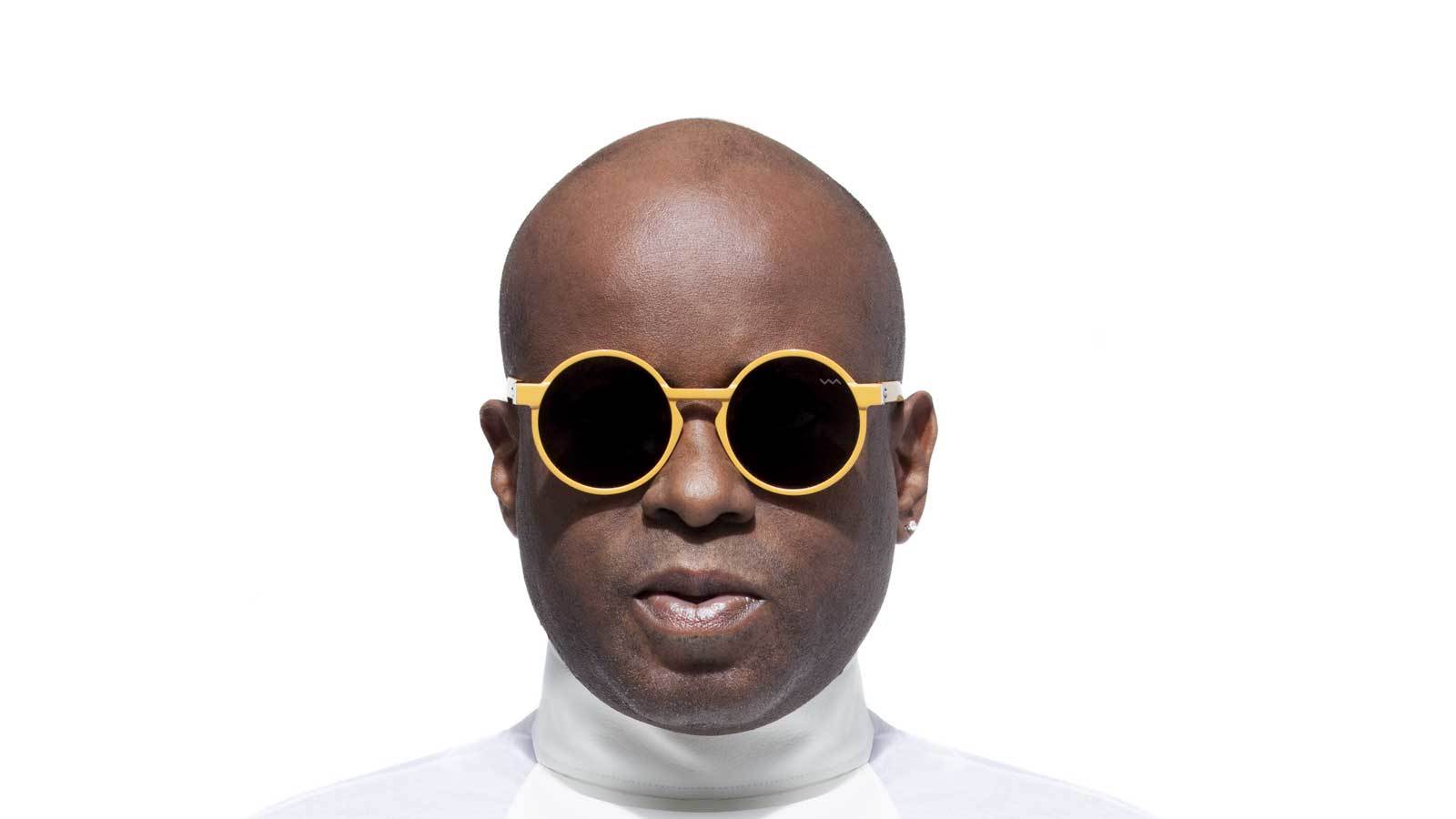
Techno music was birthed in the abandoned warehouses and smoke filled dance clubs of a deindustrialized Detroit. Everything was going downhill in America’s blackest major city. Detroit’s bankruptcy and subsequent “comeback” was over three decades away. There was no hope on the horizon. It was here that three students from Belleville High School (located in Belleville, Michigan) created a new kind of music that shook the planet. Juan Atkins, Derrick May, and Kevin Saunderson became known as the Belleville Three. Of course, we have to give credit to Derrick May and Kevin Saunderson for their indispensable contributions to this new genre of electronic dance, but none of it would have been possible without Juan Atkins.
In 1980, Juan Atkins was attending Washtenaw Community College in Ypsilanti, Michigan, where he met a man named Richard Davis. Together they formed a two man band called Cybotron, where they created music using only synthesized instruments — drum machines, electric keyboards, vocoders, and so on. They released a single in 1981 called “Alleys of the Mind” that received airplay from the eccentric and format breaking Detroit radio DJ Charles Johnson, known professionally as the Electrifying Mojo.
It’s impossible to tell the story of techno and Juan Atkins without mentioning the Electrifying Mojo. He was a bizarre cultural anomaly that hosted a radio program in Detroit called The Midnight Funk Association. His show would begin with an opening sequence that involved “the landing of the mothership” every night at 10 PM. He spoke in a hushed, creepy tone, which he would use to utter his famous tagline: “Whenever you feel like you’re nearing the end of your rope, don’t slide off. Tie a knot. Keep hanging, keep remembering: it ain’t nobody bad like you.”
Unlike pretty much any other radio DJ of the era, Mojo had no allegiance to any particular genre or format. He would often play albums in their entirety, mixing it up with Prince, Led Zepplin, Parliament Funkadelic, David Bowie, Kraftwerk, Billie Holiday, punk rock, dance music, classical, metal, etc. The incredible thing about his show is he would get on air and play whatever he wanted. He was the first person to bless the Detroit airwaves with this new sound, crafted by the Belleville Three.
Juan Atkins was heavily influenced by the aforementioned German band Kraftwerk. They created futuristic soundscapes with synthesizers that painted a picture of an 80s dystopian sci-fi movie. Juan Atkins took what Kraftwerk was doing over in Germany and added the black American funk and bass style, and that was the beginning of electronic dance music as we know it today.
In 1985 Atkins founded a record label called Metroplex Records, where he released the bulk of his work under the name Model 500. He would continue to release music under the name Cybotron until 2024 and released the final Model 500 single back in August of this year.
Techno would quickly take root in Europe, particularly in Germany, which is a big reason many people mistakenly think electronic dance music comes from Europe. Chicago would put their own spin on it with house music. Similar to Detroit techno, Chicago found its home in empty warehouses and gay nightclubs.
This was years before major record labels or big money sponsors would dare to touch these kinds if events. There was no Jars Cannabis stage or Red Bull tent, as you’ll find today at Detroit’s annual Movement Festival. The moneyed interests thought, “Who cares? All of those people are either black, gay, or on drugs. We don’t want their business.” It would take decades before the genre would fully realize its international acclaim and mainstream acceptance.
The Detroit Electronic Music Festival (DEMF) was founded in 2000. It changed names and ownership several times over the years, including a very brief stint under the stewardship of Derrick May and Kevin Saunderson. It is known today simply as the Movement Festival and played a modest role in the mainstreaming of electronic music. You have to remember, this was years before there were dozens of corporate dance festivals all over the country like there are today. The Electric Forest wouldn’t emerge for another 11 years and the only comparable event that took place before 2000 was the Electric Daisy Carnival.
Movement takes place over Memorial Day weekend in Hart Plaza in Detroit, over looking the Detroit river, just across from Windsor. The festival is three days and draws a daily attendance of 30,000 people. It’s hard to say how many people attend the festival overall, since some go for the full three day weekend and others will go just for one or two days. Aside from being involved in organizing the event early on, each of the Belleville Three performed at Movement numerous times and carried on the legacy that they had built.
People come from all over the world for Movement. I had the opportunity to see Atkins perform at the Movement Festival with Cybotron in 2023. It was then I realized that dance music, more than any other genre, boasts the most diverse group of concert goers. It draws people from all races and class backgrounds. I remember during his solo performance looking around at people with a wide array of unique self expressions and fashion sense.
It was this same year that I struck up a conversation with a man from Spain who flew all the way across the Atlantic Ocean to attend the Movement Festival. I asked him what he thought of Detroit. He told me he had never seen so many abandoned buildings in his life. I had to laugh. What he didn’t understand is these kinds of dilapidated eye sores were where techno, and by extension all electronic dance music, began. Indeed, Detroit seems out of place in the wealthiest nation on earth, and yet the its creative contributions are felt on dance floors around the world. George Carlin said the people with the least freedom are always the freest in their creative expression. This statement rings true to me.
Juan Atkins passed in Mexico City on October 31, 2026 at age 64. Even though he’s no longer with us, his legacy as the originator of electronic dance will be held in high regard until the end of time.