


After an excruciating night of watching the votes slowly trickle in, Abdul El-Sayed narrowly clinched Michigan’s very ugly and contentious Democratic Senate primary — the most expensive Democratic primary in US history. This is an extraordinary result for a lot of reasons. AIPAC dropped a personal record amount of over $30 million to support Abdul’s opponent Haley Stevens, which was just part of the breath taking $60 million in super PAC and outside spending money that undergirded her campaign. If you don’t live in Michigan, it would be almost impossible for me to exaggerate how much this state was blanketed in a never ending onslaught of pro Stevens propaganda. Countless radio ads, TV ads, social media buys, mailers — all to prop up a candidate that in any other circumstances would be DOA. Overall, Haley Stevens ran one of the most embarrassing political campaigns I’ve ever seen, making her 1% margin of defeat kind of astonishing, but it serves as a reminder that money still moves the needle more than anything else in American politics.
Stevens suffers from something a lot of moderate Democratic politicians can relate to, which is a lack of any discernible political beliefs aside from her unconditional support for Israel. If you were following this election, I want to pose a question: What was Haley Stevens running on? What was her platform? One thing I can point to is a ban on stock trading for members of Congress, which is not a bad idea, but it’s this kind of nibbling around the edges that to me is so uninspiring and insufficient for the political moment we’re currently in.
The most popular political figures of the last ten years all have signature policy positions that everyone associates with their political brand. Donald Trump, probably the most consequential political force of this generation, ran on building the border wall and doing mass deportations. Bernie Sanders ran his two presidential campaigns on Medicare for all and publicly funded colleges. Zohran Mamdani ran fast and free buses, rent freeze, and childcare. El-Sayed basically ran on the Bernie platform. He developed a campaign mantra: “Money out of politics, money in your pocket, and Medicare for all.” Whether you love or hate any of these people I’ve mentioned, you probably associate them with these respective policy positions. That’s how meaningful electoral movements are built, and in that sense, Stevens lacked a clear political vision that people could connect to.
What El-Sayed lacked in financial backing he made up for in grassroots support. There’s a blossoming left wing media landscape that consolidated behind him that didn’t exist in 2016 or 2020. I attended Abdul’s get out the vote march on August 2. It was raining, but that didn’t stop hoards of people from coming out to walk between Anthology Coffee and the spirit of Detroit. It was a jubilant atmosphere. I noticed a number of out-of-state political influencer types that flew in to support the campaign. One man I met known on Instagram as Jolly Good Ginger has about 1.8 million followers. Another person from the group Track AIPAC who goes by Freddy G was also in attendance. They were getting interviews with the candidates who showed up and made videos to post online and spread the word. There was a lot of media in general, friendly and unfriendly. A reporter from the New York Post (my least favorite publication) approached me and asked if I was willing to be interviewed. I declined and began loudly cursing at him inside the coffee shop. It was so noisy that I don’t think many people noticed.
Of course, a lot of hay was made by the Stevens campaign about Abdul’s association with controversial left wing Twitch streamer Hasan Piker. Indeed, Piker’s influence has become a sticking point for the establishment wing of the Democratic Party during this midterm cycle, and anyone who gets close to him has to endure the wrath of liberal and conservative media endlessly attacking them. It feels like every major news program has run through the same couple talking points that everyone else has already beaten to death. “Hasan said America deserved 9/11,” they say this over and over again. This talking point has fallen flat many times, but that doesn’t stop the establishment from continuously pushing the big red button that doesn’t do anything. “Hasan Piker uses a shock collar on his dog.” A very strange and unsubstantiated talking point that never seems to die. “Hasan Piker is a radical socialist.” This one may be true, but if it is, so are the legions of young, downwardly mobile men and women who make up his fan base. The problem with constantly harping on Piker is that the overwhelming majority of Michigan voters don’t know who he is and don’t care.
What a lot of older people fail to understand is that many young people agree with the sometimes shocking things Piker has to say. He’s tapped in to the anger that a lot of disenfranchised young progressives feel about the current state of our political system. In fact, the shock value and humor is often the point for Piker.
Another interesting aspect of this race is how the endorsements shook out. Stevens failed to get any big names behind her, aside from Michigan’s outgoing Governor Gretchen Whitmer. Whitmer’s popularity has taken a sizable hit after she participated in a ground breaking ceremony for a very unpopular data center currently being built in Saline Township. Stevens also ran some very misleading ads that seemed to suggest former President Barack Obama had endorsed her Senate campaign (he hadn’t). One of her ads that ran over and over again on 92.3 The Mix included an old audio clip of Obama praising Haley Stevens for her roll in the automotive bailout.
On the other hand, Abdul racked up a number of notable endorsements. Bernie Sanders, who is consistently polled as one of the most popular living politicians in the United States, endorsed El-Sayed. Squad member Rashida Tlaib endorsed El-Sayed as well. The UAW endorsement (a big deal if you’re running for office in Michigan) also went to El-Sayed. Even tot superstar Ms. Rachel, a well known advocate for the dispossessed children of the world, gave a full endorsement to El-Sayed.
Stevens was not an effective communicator during this race. One very bizarre clip that circulated during the closing days of the campaign featured her admonishing, “The cool kids on the internet, doing the cool kid chatter.” She went on to suggest that coastal elites were making fun of her accent. Despite how embarrassing such a statement was for her, she ran a campaign ad using the clip on social media and did pay for play posts featuring the clip on hip hop slop platforms like No Jumper, DJ Akademiks, and World Star Hip Hop. During the second debate, she flopped while Abdul remained on message and attacked her on every front he was supposed to. Things like AIPAC, ICE, data centers, DTE, etc. He managed to stick her to all of the biggest villains for Democratic Party voters in Michigan.
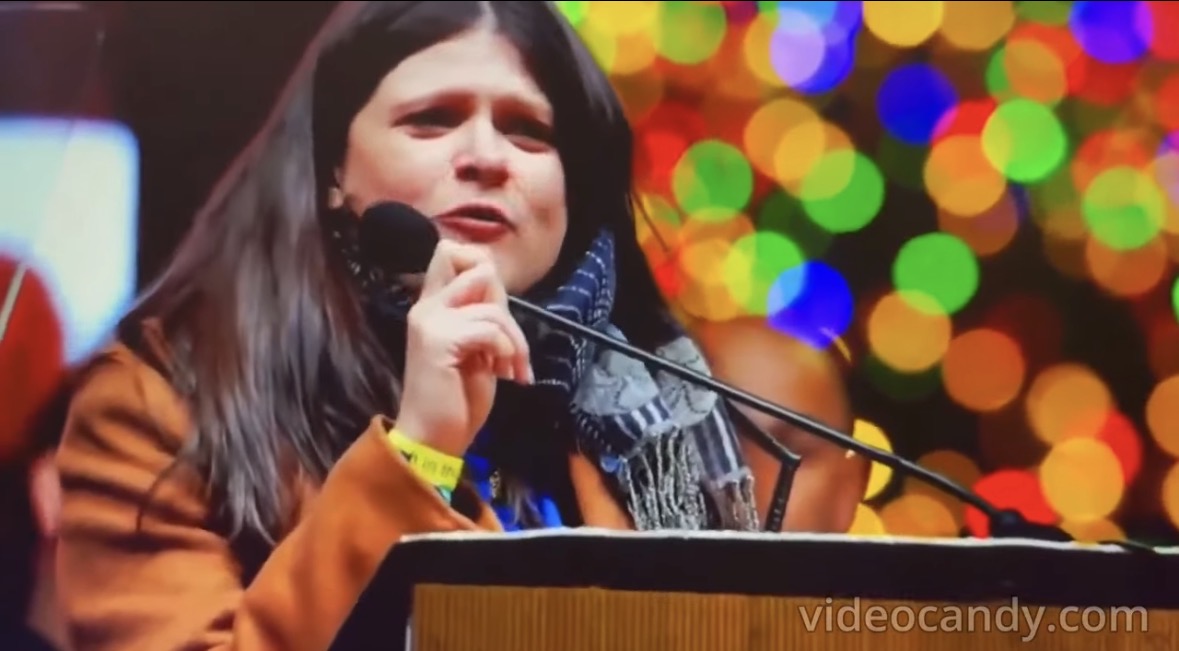
But the thing that probably hurt Stevens the most with Michigan progressives was a widely circulated clip from a 2023 Hanukkah event in Campus Martius Park, where she proclaimed her support for the state of Israel by saying, “Israel comes to me in my dreams.” This clip will likely haunt her for the rest of her political career.
All of this to say, Stevens made almost every conceivable error that she could have made, while Abdul made every right move he could’ve made. Despite this, the race was vanishingly close, a bad sign for Abdul’s chances in the general matchup with Republican candidate Mike Rogers. Even so, Abdul has shown that there is a level of popular support that you can hit that will overcome unlimited amounts of super PAC spending. All in all it was worthwhile to participate in this election, if for no other reason than to flush that $60 million in super PAC and outside spending money down the toilet.
+ There are no comments
Add yours